
×
Erwähnungen
"For a long time I wanted to make a film about individuals and the religious rules imposed on them" - Interview with Nader Saeivar on "Hijamat"

Von Lidanoir in "For a long time I wanted to make a film about individuals and the religious rules imposed on them" - Interview with Nader Saeivar on "Hijamat"
am Samstag, 11 Juli 2026, 01:01 Uhr
- 0
- 0
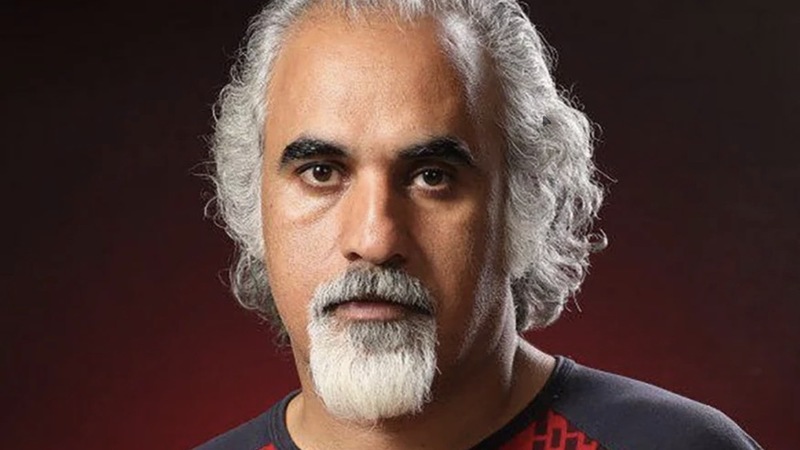 Bildnachweis: © KVIFF 2026
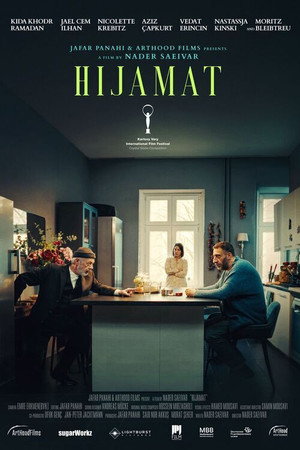
After shooting three feature films in secret in his home country, Iranian director Nader Saeivar has now created his first foreign-language feature with Hijamat. Shot in Berlin’s close-knit Turkish community, the story follows two brothers, one in a strained marriage, the other a closeted gay man, as they struggle to reconcile their personal needs with their faith and family obligations. Four years after presenting his second film at Karlovy Vary, he is back at the festival, competing for the Crystal Globe. On site at Hotel Thermal, the Iranian director spoke with Lidanoir about leaving Iran, getting a new perspective on queerness and religion, and his personal relationship with brotherhood.
Lida Bach: Nice to meet you, Nader Saeivar. You're here with your fourth feature and second film at the Karlovy Vary Film Festival. It deals with queerness, struggling with family and with religion. What inspired you to create this story?
NS: This is my first film made outside Iran. For a long time I wanted to make a film about issues that are personally important to me, and one of them is the struggle between individuals and the religious rules imposed on them. I grew up in a religious country and constantly experienced the contradictions within religion. There was no possibility to openly discuss these issues in Iran.
Finally, after leaving my home country, I had the opportunity to address the subjects that had concerned me for many years. Homosexuality is one of the issues that religion, and maybe Islam more than others, has problems with. This became the creative starting point, as it allowed me to explore these broader questions. Entering the Muslim community in Germany gave me the opportunity to tell the story I really wanted to tell.
LB: Was censorship the reason you set the story in Germany, or were there other factors?
NS: I had to leave Iran anyway. My first three films were made without official permission, so staying in Iran would have created serious problems for me. Leaving the country was the only option, so naturally my next film was made outside Iran.
LB: You also shot the film in German. Was it challenging to make a film in a language that isn’t your mother tongue?
NS: Not really. I live in Berlin, where Turkish is spoken by a very large community. I come from the Turkish-speaking region of Iranian Azerbaijan, so I was quickly accepted by the Turkish community there. Personally, I didn’t encounter any major difficulties.
LB: How did adapting the story to a different society affect your screenplay? Did the German setting change the way you approached the story?
NS: Of course. If this story had been made in Iran, it would have looked completely different. In fact, I also wrote another screenplay about the same broader issue that is currently being adapted by an English director. It is based on the true story of Alireza Monfared, a young gay Iranian man whose own brothers lured him into a car, drove him to a remote field and murdered him by cutting his throat. Although the story is set in Iran, the film can only be shot very close to it, in Jordan.
LB: Was it difficult to research within the queer community, especially among queer Muslims? Were the people you met reluctant to open up about their experiences?
NS: When I arrived in Berlin, I experienced a real cultural shock. I discovered that there is an LGBTQ-inclusive mosque called the Ibn Rushd-Goethe Mosque, where people practice a more inclusive interpretation of Islam.
Men and women pray together there, and women are not required to cover their hair. At the same time, many other Muslim communities do not accept this special community. I found it fascinating to see how social pressure can lead people to reinterpret their own religion rather than abandon it.
I asked members of the congregation why they didn’t simply convert to another religion. They told me, “We don’t want to leave our community or change our faith. We want to remain who we are while living according to our own identity.” I listened carefully to their stories, and the screenplay grew directly out of those conversations.
LB: The younger brother, Karam, struggles with his faith and with accepting himself as a queer person. In fact, several of the characters suppress parts of their identity due to outside constraints and lingering trauma. Could you talk about this theme of internalized repression?
NS: In the film, Karam represents Murad’s past. Murad sees his younger self in his brother and is terrified that Karam will suffer the same fate he did. He wants to break that cycle.
Everything Murad does is primarily for his brother rather than for himself. He is trying to prevent Karam from repeating his own life.
LB: Brotherhood is one of the film’s central themes. What does it mean to you personally?
NS: Well, brotherhood is something I have experienced in my own life. I had a brother, who sadly has passed away. Neither he nor I was homosexual, but I know what it means to have a brother who is your support, someone who stands beside you through everything.
LB: Family is another very important theme in the film. In many Muslim communities, family bonds appear very strong and supportive, yet those same family structures can also become restrictive or oppressive. Could you talk about this duality?
NS: These close family ties are very common in Turkish and Iranian families. They are part of a set of cultural rules often seen as unchangeable. Children are taught from a very early age to respect and follow them.
Historically, especially in the Middle East, all your social security came from the family. The family was your protection when you got ill or ran into difficulties. This made loyalty to its rules extremely important. Even today, it is very difficult in many parts of the Middle East to live completely independently, without the support of your family or community. In many Western countries it is perfectly normal for young people to leave home at eighteen and build independent lives. In the Middle East, that is much less common.
LB: Time is running out, but could you still tell a bit about the casting?
NS: We have a Persian proverb: if you want to enter a village, you should first speak to the mayor. I cast Kida Khodr Ramadan because he is a great actor, but also could, in a way, speak on behalf of the film in Turkish and Arab communities in Berlin. He is highly respected within them and could help me get access to these circles which were still new for me. His voice carries far more influence than mine. This support was very important for the film project.
LB: Thank you so much for your time and good luck at the awards!
Wird geladen...