
×
Erwähnungen
"Heroism becomes a vehicle for fantasy" - Interview with Daniil Merkulov on "Sea Sons"

Von Lidanoir in "Heroism becomes a vehicle for fantasy" - Interview with Daniil Merkulov on "Sea Sons"
am Donnerstag, 18 Juni 2026, 20:27 Uhr
- 0
- 0
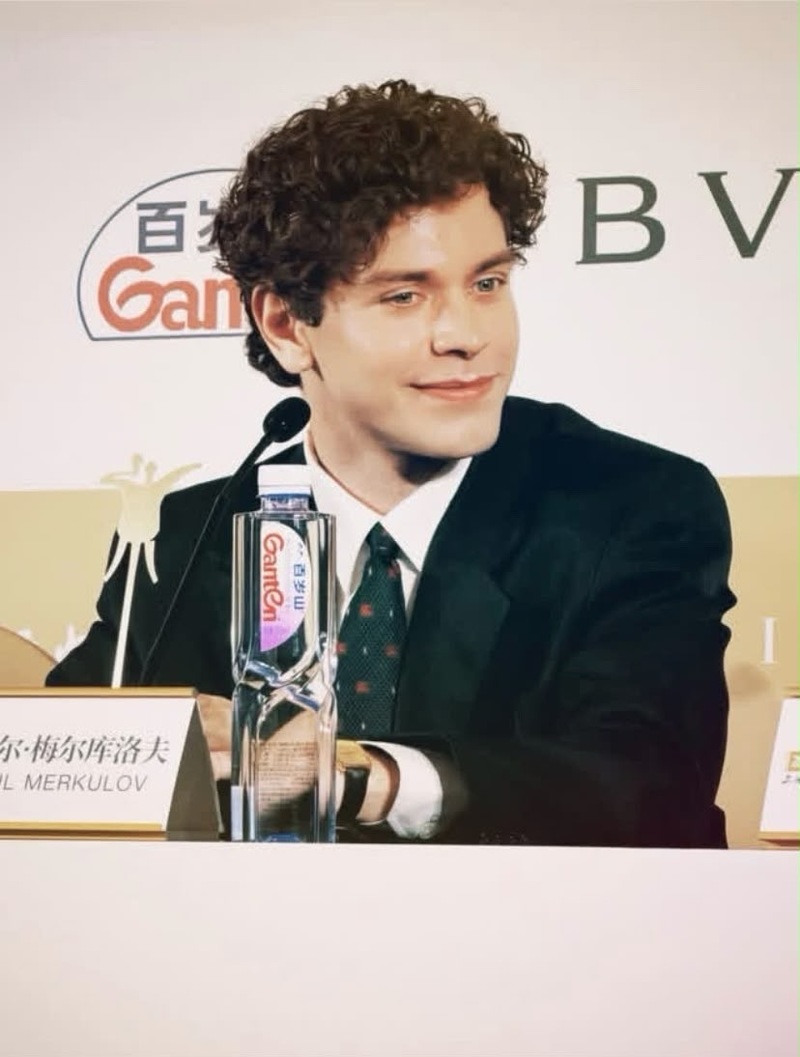 Bildnachweis: © SIFF 2026
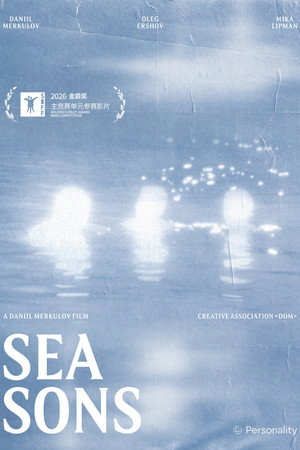
Still in his early twenties, Daniil Merkulov has already made it to the competition of one of the world's fastest-rising A-List festivals. Produced with a minimal budget and diving into a fairytale-like black-and-white world of childhood heroes and mythical quests, his feature film debut Sea Sons just premiered at Shanghai. At the festival's busy main hub, the director-writer spoke with Lidanoir about taking financial risks to realize his film, how he sees a young generation around him withdraw into fantasy worlds, and finding a festival slot for a Russian production.
Lida Bach: Your feature film debut was selected for the main competition of the Shanghai International Film Festival right away. How does that feel?
Daniil Merkulov: It feels like a dream. We’ve talked about it many times, and whenever we’re asked about it, we still can’t think of a better way to describe it. We simply can’t believe it. From the moment we heard the news until now, the whole experience has felt unreal.
LB: How difficult was it to realize the project? Was it essentially a guerrilla production?
DM: Financially, the film cost under $20,000, which is still a significant amount of money. We run a company that produces commercials, so we saved money from that work. We saved as much as we could, took out loans, and we’re still paying some of them back. It was a long journey, but I think that’s quite common for independent arthouse films.
LB: When you’re making a film like this, success isn’t guaranteed. In fact, there are calculations suggesting that a low-budget horror film will almost always make money, while an arthouse film, no matter how good it is, often loses money. Were you worried about that?
DM: Not really. I believe that films you make because you truly believe in them rather than because you want to make money, often find their audience. From the beginning, the question wasn’t whether the film would be commercially successful, but simply whether we could make a film at all.
LB: What do the themes of heroism and naivety mean to you, and why did you choose these?
DM: I think the theme of heroism only works because of this other important aspect of prolonged childhood. These characters are essentially children in their twenties. If they were fully grown adults, they wouldn’t be able to live in the world they inhabit, ask the questions they ask, or believe that becoming a hero is even possible. They couldn’t go on this journey or have these encounters. For me, prolonged childhood is the central theme. The heroic quest is really a way for the characters to avoid confronting more difficult questions: how to be a person, how to feel, and how to act responsibly. Heroism becomes a form of escape.
LB: The film can also be read as a critical portrait of a younger generation. You’re still very young yourself, only slightly older than the characters who seem very naïve and self-absorbed. Do you see those tendencies in the young generation around you?
DM: Of course. I’m part of that generation myself, and I don’t think that’s something to hide. I feel too young and too inexperienced to offer definitive answers. The film is my way of asking those questions of myself and of my generation.
LB: The characters are searching for role models and historical figures they can emulate. Many of those figures are associated with war. How does that connect to contemporary society? Is there a political criticism involved?
DM: I don’t think the film is trying to deconstruct heroism in a political sense. It comes from the characters’ naïveté. The heroes they admire—Joan of Arc, Jason, King David—are the most straightforward heroism. Rather than engaging with those figures critically, the characters live in their own small world, and those heroic figures are part of that world.
LB: You chose to shoot the film in black and white. Why?
DM: The black-and-white imagery reflects the limitations of the characters’ world and their disconnection from reality. By the end of the film, when color appears, it’s a sign that they’re finally leaving that closed world behind. It’s a moment of growing up to see something beyond themselves: the sea, another person, ordinary life.
LB: There’s also the element of nostalgia …
DM: Young people often romanticize things they’ve never experienced and worlds that may never have existed. Black-and-white cinema was once simply a technical necessity, but for younger generations it has become something nostalgic and mythical. So it’s a good method to convey that idea.
LB: Music plays a major role in the film. Although it is diegetic, songs recur throughout the story, giving it almost the structure of a musical.
DM: Music functions very similarly to the theme of heroism. It’s another way of escaping reality. Whenever the characters are confronted with genuine emotions or real human connections, they tend to avoid those experiences by retreating into music. For example, one character sings a song about his childhood and his grandmother. Rather than dealing with the reality of his present life, he escapes into memory. Music becomes a vehicle for nostalgia, just as heroism becomes a vehicle for fantasy. Both are expressions of the characters’ inability to face reality directly.
LB: The story adapts the structure of a fairy tale. There are recurring groups of three, mythic figures, and a timeless atmosphere. What drew you to that approach? Were there particular fairy tales that inspired you?
DM: I wanted to create a fairy-tale environment so that viewers wouldn’t be distracted by a specific social or political reality. Fairy tales often exist outside of time. That moment you create a realistic contemporary setting, you need contemporary artifacts: phones, cars, technologies, and so on. Those details immediately anchor the story to a specific period. I wanted to remove those markers and create something timeless. When a film isn’t tied to a specific moment in history, audiences can focus more directly on the actions and choices of the characters. That’s what interested me.
LB: You told me earlier that the actors are famous in Russia. How did the casting go and what was it like working with them?
DM: When we started, me and my producer were not at all well known. However, many of the actors who eventually joined the project were already quite famous in Russia. Originally, we planned to work with less prominent actors, but those plans changed when, surprisingly, the actors who ultimately appeared in the film all agreed to participate after reading the script and speaking with us. They worked without pay, which is unusual in our industry, especially for actors with established careers. Many of them already had a certain screen image in the eyes of a Russian audiences. Sometimes we used that image, and sometimes we deliberately undermined it by casting them in roles very different from what viewers expected.
LB: What was the greatest challenge during production?
DM: There were many challenges, but one scene stands out. We filmed a musical sequence on a huge staircase leading to the beach in Anapa. The staircase was the only access point to several kilometers of shoreline. Since we had no permits, we had to temporarily block the stairs while shooting. We’d close them for a few minutes, filmed the scene, then let people pass before repeating the process. Many beachgoers were understandably unhappy, so managing those situations was quite difficult. Considering that we shot the entire film in just ten days with a very small budget, it was one of the most demanding parts of production.
LB: Several major festivals consider an exclusion of Russian productions as a sign of protest. Did you experience difficulties with breaking into the festival circuit?
DM: To be honest, it’s difficult for me to comment, not because I don’t want to, but because I never imagined to be in this position. We made this film for about 1.5 million rubles, and our ambitions were very modest. Getting into a major international festival already feels miraculous simply because of that.
LB: As festivals and industry figures discuss boycotting Russian cinema, what are your thoughts on that debate?
DM: We’ve spent so much time focused on simply making the film that larger political discussions were never something we expected to be part of. What I can say is that, given today’s world, I can’t imagine a better place for the international premiere of a Russian film than Shanghai.
LB: Yeah, that seems very true … Now that you’ve completed this project, are you already working on another one?
DM: Yes. I’ve just finished writing the script for my next feature film. It will be a co-production between Russia and Serbia, and we’re currently looking for Serbian partners and financing. The budget will be somewhat larger than that of my first film, but it will still be a very modest arthouse project. We’re actively developing it and seeking investment and financing partners.
LB: Thank you for the interview, and all the best with the new film project!
Wird geladen...