
×
Erwähnungen
Stéphane Brizé: "In a position of power, you are forced to question your relationship with others"

Von Lidanoir in Interview Stéphane Brizé on "A Good Little Soldier"
am Sonntag, 13 September 2026, 22:09 Uhr
- 0
- 0
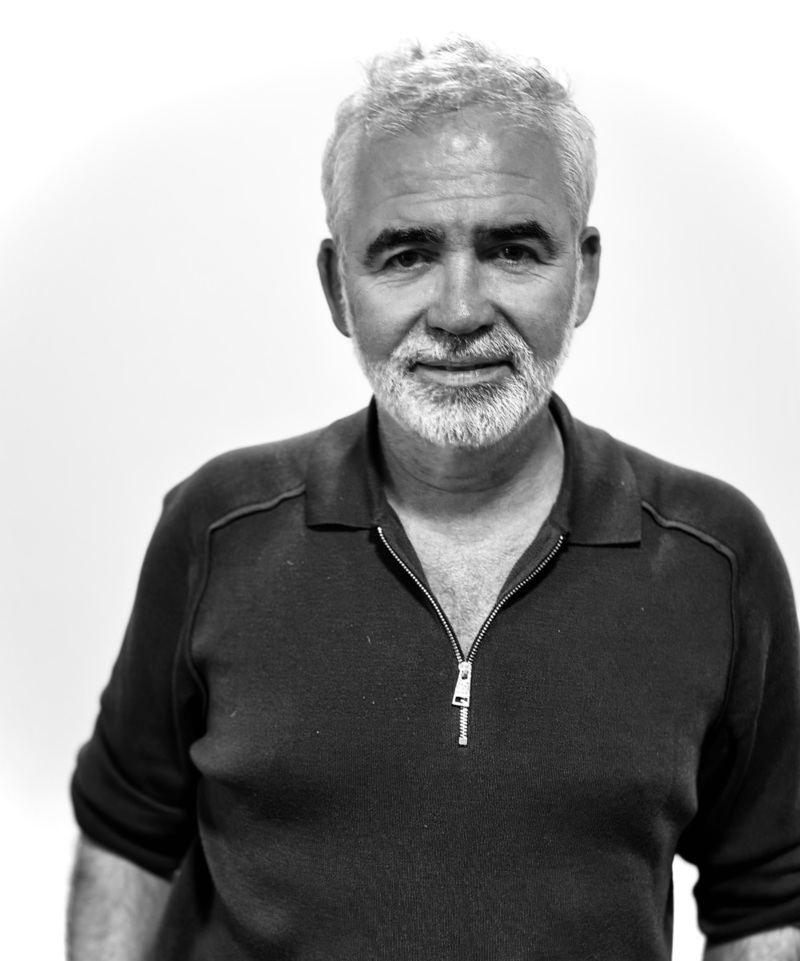 Bildnachweis: © MB
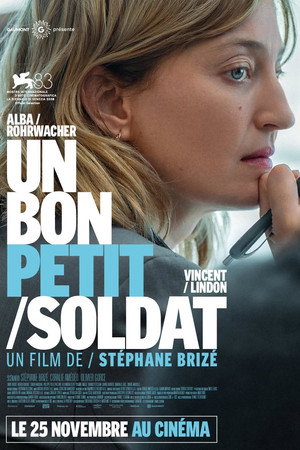
Corporate culture is a consistent theme of Stéphane Brizé’s films, the newest of which is no exception. Starring Alba Rohrwacher and Vincent Lindon, A Good Little Soldier turns a caustic lens at toxic workplace structures, professional hierarchies, and the people pushed to enable them. Following the competition premiere in Venice, Brizé speaks with Lidanoir about the origins of the project, his continued collaboration with Rohrwacher, and pursuing his own goals without compromising his ethics.
Lida Bach: How did you find this story, and convinced it’s amazing lead actors, Alba Rohrwacher and Vincent Lindon, to join it?
Stéphane Brizé: In order to convince someone like Alba Rohrwacher to accept a role, you have to have a very strong screenplay. Actors at that artistic level are often offered very good opportunities. . I had this very complex character in mind. This film exists because before it I made three other films that took place inside companies. Somehow, with age, my anger towards the system has taken on different colors. I now feel really nauseated by a system that tries to protect itself by creating a fanciful narrative aimed at masking the brutality and violence of the rules that govern it. I felt it was the right time to tell such a story, with a woman manager who has somehow embraced those violent rules. T way Carla works is exactly the same as all the men around her.
LB: She’s simply doing her job as an executive, and yet she’s losing her family. So what does this mean for all the men who do the same job?
SB: It’s a story about men who have a high level of responsibility. They are put into high positions within big companies not out of generosity by men, but because they have consciously or unconsciously accepted the brutal and violent rules that designed those same positions. Therefore, men tolerate them. But they are using exactly the same weapons. Someone like Carla, and women at this level of power, have integrated something without necessarily being aware of it, without necessarily saying, “I’m a violent person.” But to be there, you have to accept certain rules.
There was the idea of a form of irony, because professions such as human resources are rather commonly associated with women in companies. Because in the collective imagination, women are attributed a higher capacity for benevolence. So, in the collective imagination of people in a company, these women are supposedly more inclined to pay attention to others.
Someone like Carla is accepted because she is capable of being very strict. And there is a form of irony because her job is human resources manager, and that kind of position is very commonly occupied by women. In the collective imagination, women are more willing to be good and caring towards others, whereas, in reality, they can be just as strict as men in the same position.
Of course companies don’t tell employees they will have to do ethically ambiguous things.
Instead, the system, creates a narrative of courage. There is always a need to build a virtuous narrative to get past the brutality involved in performing your job. It’s always a very positive message that is sent: the need to be virtuous when you are in that position.
LB: In your previous movie, you showed the consequences of the workplace environment on people’s private lives. Now it’s about the neo-liberal language of performance and achievement?
SB:. The liberalism went far beyond the working aspect of our lives. It managed to cannibalize everything, from our private lives to the school system, justice and public health. Everything is dictated by the rules of liberalism.
I had a picture that I put on the front page of my screenplay. It was a huge billboard on a building that was being refurbished, with Mbappé saying, “Pressure Is My Pleasure.”
Of course, that can easily be said by a great sportsman who earns millions, but the fact that it was occupying a public space and inviting people to enjoy pressure seemed completely terrifying.
LB: what inspired you to the character played by Vincent Lindon, did you have somebody specific in mind?
SB: When you are at the very top, there is no longer much room for pressure, since you are not stuck between two levels. With someone intelligent, it becomes even more terrifying. He is completely surrounded by good little soldiers, and he is completely politically incorrect in what he says. Saying that a disabled person is a burden is terrifying. But he is so smart because he is verbalizing what everyone else thinks. So I didn’t need a specific model to carve out this character. In order to build a film, I normally meet a lot of people to feed my narrative, but I never had the opportunity to meet a CEO. I would like to one day.
But somehow I don’t need it, because I know that people in those positions are capable of being convincing and intelligent all the time.
LB: Did personal experiences from your own career, which has been going on for a long time, also inspire this film? And how do you avoid the structures we see in the film, which can arise in every workplace, from emerging on your sets where you work? There is also a big production system that can reinforce them.
SB: But the question of power arises when you are in these positions. It is especially true with actors and at the time of casting. At that moment, we are in a position of colossal power, and we are automatically forced to question our relationship with others.
I suffer from a lack of budget. But my desire never compromises with the pressure a producer might put on the making of my film. It is somehow similar to a dictator’s position. And it reflects my relationship with the idea of liberalism, because I try to turn each constraint into an advantage, despite the fact that I am in a position of power.
I don’t want other people to suffer from those limitations. I turn them into an advantage for myself. So maybe, although I claim to be a very leftist man, I am a rightist man in a way.
I’m joking, of course, but I try to turn everything to my own advantage. It will never be to the detriment of someone else. It has to remain a very human relationship. I want to share the pleasure and respect that I felt on the red carpet last night, for instance. Although I am in a position of power when dealing with the crew, the actors and also the casting, I would never ask them to suffer for my own advantage.
Wird geladen...