
×
Erwähnungen
„ Society should protect its children.“ - Interview with Fanny Liatard & Jérémy Trouilh on "The Green Eyes"

Von Lidanoir in „ Society should protect its children.“ - Interview with Fanny Liatard & Jérémy Trouilh on "The Green Eyes"
am Donnerstag, 06 August 2026, 13:10 Uhr
- 0
- 0
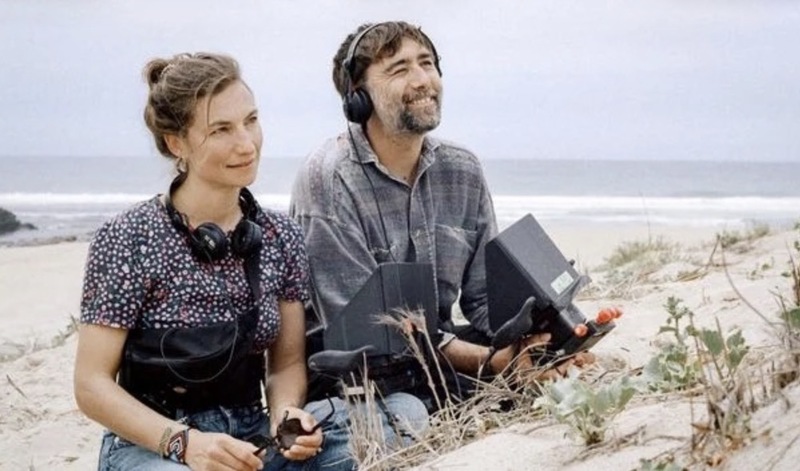 Bildnachweis: © Locarno 2026
After their symbolically charged coming-of-age story Gagarin brought them their big breakthrough, Fanny Liatard and Jérémy Trouilh are set to open the Locarno Film Festival with their second feature film. In The Green Eyes, the French director duo imagines the psychosomatic paralysis and hopelessness of the contested Swedish "resignation syndrome" as a gentle dream journey. On the day after premiere screening, Liatard and Trouilh spoke with Lidanoir about the real-life inspiration for their story, achieving its immersive imagery and approaching their family fairy tale's harsh political background.
Lida Bach: Hello, Movie Breakers! We're still in Locarno, and I'm delighted to be joined by the directors of the opening film, The Green Eyes, Fanny Liatard and Jérémy Trouilh. It's wonderful to have you here.
Fanny Liatard & Jérémy Trouilh: Thank you.
Lida Bach: Just a few years ago, you made your feature film debut with Gagarin, which was very successful. Now you're opening the Locarno Film Festival with your new film. How does that feel?
Fanny Liatard: It's huge for us. We've been working on this film for five years. We were very lucky that Gagarinreached so many people, but its world premiere took place during the COVID pandemic. Cannes was a virtual festival in 2020.
So this is actually the first time we're presenting one of our feature films at a world premiere with a live audience—and what an audience! Piazza Grande, with thousands of people. All our actors were here, as well as part of our crew. Everybody discovered the film for the first time together with the public. It was a very emotional experience.
Lida Bach: Tell us a little about how you first came across this story. The film deals with resignation syndrome, which is a very particular condition.
Jérémy Trouilh: Around six years ago, we came across a photo exhibition showing two sisters in Sweden asleep in their little beds. We were deeply moved when we learned that resignation syndrome was a real condition and that hundreds of children had been affected by it.
From that moment on, we started researching the syndrome to better understand it. But we also discovered that there were many unanswered questions because it hasn't been extensively documented. Fortunately, we had the chance to get in touch with Dr. Ul Kranz in Sweden, who has cared for many children affected by resignation syndrome. She shared a great deal of information with us, which we tried to incorporate into the realistic aspects of the film.
Then another question emerged: What happens to these children while they are asleep? Are they dreaming? What do they feel? Nobody had the answers. So we decided to imagine them and create a fictional story around that idea.
The film tells the story of a little girl who believes she can enter her brother's dreams. She tries to save him by entering his dream world and confronting the trauma they both experienced during their migration journey.
Lida Bach: You describe it as an illness, but technically it's considered a condition rather than a disease, because it hasn't been officially classified as one by the World Health Organization. Do you know why that is? And why does it seem to occur almost exclusively in Sweden? There are similar conditions elsewhere, but they resemble catatonia more closely, whereas resignation syndrome appears to be something different.
Jérémy Trouilh: It's difficult for us to give a completely scientific answer because we're not doctors. We wanted to be as accurate as possible in the information we shared, but we also had to acknowledge the limits of our expertise.
Lida Bach: You mentioned something during the press conference—that children often improve after a political decision is made regarding their asylum status. That's a crucial difference from catatonia. Catatonia doesn't have a political context; it simply occurs.
Fanny Liatard: Exactly. Dr. Ul Kranz has followed around one hundred children affected by this condition over the past fifteen years. From her experience, most of them begin to recover once their family finally gains a sense of security. In many cases, that feeling of security comes when their asylum application is accepted.
What's striking is that many children fall into this profound state after learning that their family's asylum request has been denied. Looking at hundreds of documented cases, you can clearly see a connection between this deep lethargy and an extreme situation of vulnerability.
These are children who have fled their home countries, often after experiencing severe trauma either there or during their migration journey. Then they arrive somewhere new and begin creating a new life. Creating a home means many things: finding stability, learning a new language—which children often do very quickly—and integrating into a new society. In many families, it's even the children who read the official letter informing them that their asylum application has been rejected.
All of these elements gradually emerged through our research and through conversations with children and young adults who had recovered from resignation syndrome and were willing to share their experiences. Those conversations became the foundation of our story. We didn't want to make a documentary—we wanted to make a work of fiction.
One of the ideas that particularly touched us was the relationship between siblings. In some families, when one child falls into resignation syndrome, the brothers and sisters are deeply affected as well. That inspired us to build this family at the heart of the film. Of course, there are also personal influences. Jérémy has a brother, and I have a sister. When we created Noah and Shai, we asked ourselves: What if the older brother is the one affected? How would the younger sister react? It felt very powerful to imagine that the love between them would guide her throughout the story.
Lida Bach: Dreams already played an important role in Gagarin, where the young protagonist retreats into a dreamlike world filled with fantasy and imagination. What fascinates you about dreams and the subconscious?
Jérémy Trouilh: We love the freedom dreams give us during the writing process. A dream has no borders and no limits, and the same is true of imagination. It opens up entirely new paths for storytelling.
Jérémy Trouilh: Dreams create new paths for storytelling, but they also create new forms of resistance. We love the idea that, when people are confronted with difficult personal or political situations, imagination can become a way of escaping. But that doesn't mean it's a perfect world.
At the beginning, when someone falls into resignation syndrome, sleep itself can almost seem like a refuge. In our fiction, the dream world we created initially functions as a shelter. But gradually it becomes a dangerous place, where the water itself becomes threatening.
Lida Bach: Just a few years ago, you made your feature film debut with Gagarin. Now you're already opening the Locarno Film Festival with your second film, The Green Eyes. How does that feel?
Fanny Liatard: It's huge for us. We've been working on this film for five years. We were very lucky that Gagarin reached so many people, but its world premiere took place during the COVID pandemic. So this is actually the first time we're presenting one of our feature films at a world premiere with a live audience—and what an audience! Piazza Grande, with thousands of people. All our actors were here, as well as part of our crew. Everybody discovered the film for the first time together with the public. It was a very emotional experience.
LB: Tell us about how you first came across this story dealing with resignation syndrome, a very peculiar condition.
Jérémy Trouilh: Around six years ago, we came across a photo exhibition showing two sisters in Sweden asleep in their little beds. We were deeply moved when we learned that resignation syndrome was a real disease and that hundreds of children had been affected by it.
From that moment on, we started researching the syndrome to better understand it. There are many unanswered questions around it, since it hasn't been extensively documented.
Fortunately, we had the chance to get in touch with Dr. Elisabeth Hultcrantz in Sweden, who has cared for many children affected by resignation syndrome. She shared a great deal of information with us and we tried to incorporate it into the realistic aspects of the film. For us, the question was: What happens to these children while they are asleep? Are they dreaming? What do they feel? So we decided to imagine them and create a fictional story around that idea.
LB: You describe it as a disease, but technically it hasn't been officially classified as one by the WHO. Do you know why that is? And why does it seem to occur almost exclusively in Sweden?
JT: It's difficult for us to give a scientific answer because we're not doctors. We wanted to be as accurate as possible, but we also had to accept the limits of our expertise.
LB: You mentioned during the press conference that children often improve after a favorable political decision is made regarding their asylum status.
FL: Dr. Hultcrantz has followed around one hundred children over the past fifteen years. From her experience, most of them begin to recover once their family gains a sense of security. In many cases, that feeling of security comes when an asylum application is accepted. Many children fall into this profound state after learning that their family's asylum request has been denied. One can clearly see a connection between this lethargy and a situation of vulnerability.
These children fled their home countries, often after experiencing trauma either there or during their journey. Then they arrive somewhere new and begin creating a new life, finding stability, learning a new language—which children often do very quickly. Therefore, in many families, it's the children who read the official letter informing them that their asylum application has been rejected.
JT: What particularly touched us was the relationship between siblings. In some families, when one child falls into resignation syndrome, the brothers and sisters are deeply affected as well. That inspired us to build this family in the film. There are also personal influences. Fanny has a brother, I have a sister. When we created Nour and Chaya, we asked ourselves: What if the older brother is the one affected? How would the younger sister react? It felt very powerful to imagine that the love between them would guide her throughout the story.
LB: Dreams already played an important role in Gagarin, where the young protagonist retreats into a dreamlike world. What fascinates you about dreams and the subconscious?
FL: We love the freedom dreams give us during the writing process. A dream has no borders and no limits, and the same is true of imagination. It opens up entirely new paths for storytelling.
JT: We love the idea that, when people are confronted with difficult personal or political situations, imagination can become a way of escaping. But that doesn't mean it's a perfect world. At the beginning, when someone falls into resignation syndrome, sleep itself can seem like a refuge. In our fiction, the dream world we created initially functions as a shelter. But it becomes a dangerous place, where the water itself becomes threatening.
For Chaya this imaginary world is the place where she can save her brother. On another level, she's diving into her own trauma. She may suffer because of that journey, but she keeps going deeper and deeper until she finds a way to reach him.
LB: With these endless possibilities , how did you find the right visual language for these dream sequences? You chose landscapes and water, which traditionally symbolize the subconscious and emotions.
FL: It took us quite a long time. Together with our co-writer, Guillaume Laurant, we explored many different possibilities. At one point we imagined the dreams taking place on an island. Sometimes you discover a photograph of a landscape that looks like the moon, and you think, "This could be where they meet in their dreams." We realized that the place where the family had found their new home could also become the landscape of the dreams, only transformed. This also happens through sound.
We paid great attention to the everyday sounds surrounding Chaya and Nour at the beginning of the film. Then, when she enters the same forest in the dream world, most of those familiar sounds disappear. It's almost like entering an inverted world, except for Chaya’s certainty that her brother is somewhere in it. That image of the black water came from our characters' backstory. Through testimonies and documentaries, we learned that many of these crossings happened at night. We asked ourselves: what would Nour remember most? Perhaps only the black water in which his mother disappeared.
LB: Tell us a little about how you found the actors for the main roles.
FL: Finding our Chaya was a very long process. Together with our casting director, Judith Chalier, we first searched in France. We needed a girl whom audiences would immediately believe was from Iraq. At the same time, we knew we were very unlikely to find a ten-year-old professional actress. We also made the decision not to cast a child who had experienced a similar migration journey herself. Since the film is a French-Belgian co-production, we expanded our search to Belgium. That's when we received a video of Dua and her sister. From the very first moment, we were struck by her incredibly luminous personality. Because resignation syndrome is such a dark subject, it was important for us to find a child who could also embody hope.
Then came the casting process itself, seeing how she interacted with an older brother on screen. It was a long but fascinating experience because Dua is such a spontaneous child. We had admired Saïd El Alami's work in previous films and wanted to make sure their relationship felt genuine. For the parents, Marion Barbeau and Benjamin Biolay were also important. Having actors with such experience helped support Dua throughout the shoot.
LB: Did you also work with families or young people who had experienced resignation syndrome? And if so, how did they respond to the project?
JT: Yes, we did. We won't mention any names, but we met several children and young people who had experienced resignation syndrome. Dr. Hultcrantz felt it was important for us to hear directly from people who had experienced the condition themselves. Before introducing us, she asked each of them whether they would be willing to meet two directors working on a film about it. Some of them agreed, and we met several young people—some over Zoom, others in person.
When you see Chaya’s eyes at the end of the film, there is some green in them. But one thing we know it represents is that what she has gone through will always leave a trace. That's something we saw again and again in the young people we met. Many of them had recovered several years earlier.
Of course, some people preferred not to speak with us, and we completely respected that. But those who did wanted their experiences to be heard. They understood that the film was also about raising awareness—not only of resignation syndrome itself, but of the vulnerable situations that children around the world continue to face. It may sound obvious to say that a society should protect its children, but when you hear these stories, you realize that it is something that still needs to be said.
LB: You both live in France, while you also spent time in Sweden where your story is set. Do you have any idea why resignation syndrome seems to occur exclusively there? Many countries have harsh and inhumane asylum policies, Germany, Italy, the UK, Hungary. So why Sweden?
FL: One possible explanation is that Sweden has traditionally welcomed many asylum seekers, but the process of receiving a decision can take a long time. During that period, children often integrate very quickly. They go to school, they learn Swedish, and they build friendships. When a negative asylum decision finally arrives, it can be an enormous shock.
That may be one explanation, but we honestly don't know. There may also be other factors related to the countries the children came from. Many cases in Sweden involved children from Eastern Europe, particularly Armenia and Georgia, although not exclusively. During our research, for example, a young woman contacted us after seeing a theater play about resignation syndrome. She realized that her brother, who had fled Rwanda, had experienced a very similar condition.
JT: I also visited an exhibition in France at Le Bal that explored collective psychological phenomena. They involved different symptoms, but they showed how groups of people can sometimes develop similar reactions after experiencing violence or trauma—for example, within the same school or community.
Researchers at hospitals in Stockholm have tried to compare cases and identify common patterns. We also don't know how much research funding is devoted to this subject. When an issue primarily affects migrant populations, governments are not always investing enough resources to understand it.
LB: If audiences could take just one thing away from your film, what would you hope it would be?
JT: I hope I don't sound too naïve, but I would simply wish for an extra dose of empathy.
LB: Before we finish, are you already working on another project?
FL: Yes, we're currently developing several projects. Our next feature film is already in development with the same producers, although it's still in the writing stage. I can't say very much about it yet, except that it will again contain a touch of magic—although in a different way.
We're also co-writing several other fiction projects, including an animated film.
LB: Wonderful. Thank you both very much for your time.

Wird geladen...