
×
Erwähnungen
"This film is about the murderous quality of classisim" - Jorge Thielen Armand on "Death Has no Master"

Von Lidanoir in "This film is about the murderous quality of classisim" - Jorge Thielen Armand on "Death Has no Master"
am Samstag, 23 Mai 2026, 00:37 Uhr
- 0
- 0
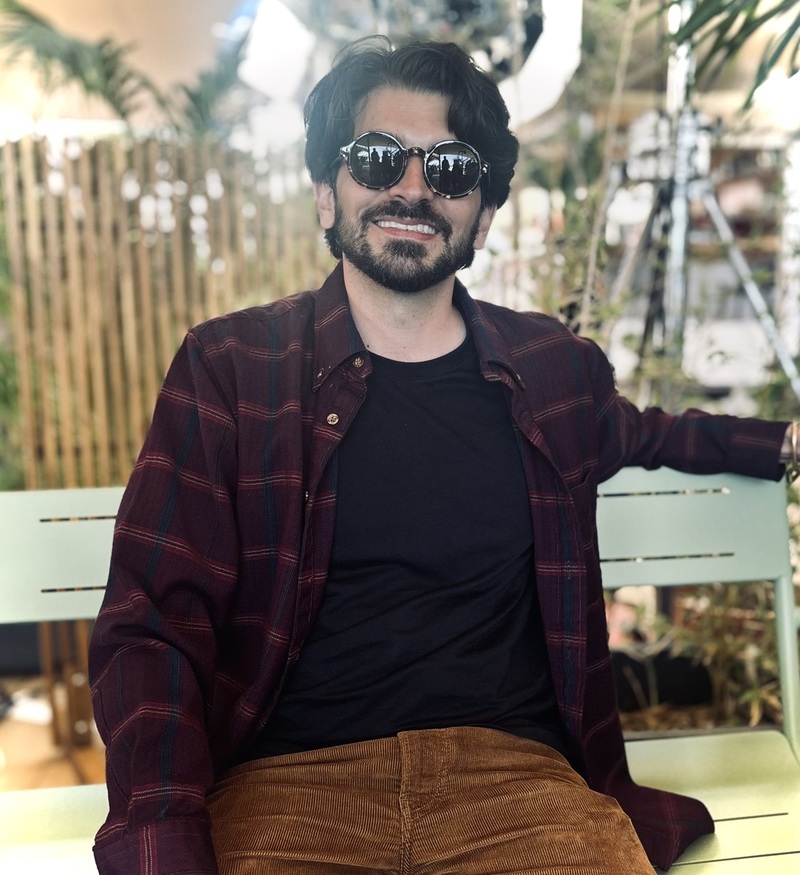 Bildnachweis: © MB
The colonialist past of his home country Venezuela and the ambivalent forces of family legacy mark Jorge Thielen Armand's cinematic work which his youngest work takes to new genre heights. Death Has no Master intertwines crime thriller and metaphysical dread to a sinsiter study of social and psychological repression. At Cannes' Directors Fortnight where his work just had its debut, the Venezuelan director-writer talks about casting Asia Argento in the lead, his fondness of acustic ambiguity, and the tense political climate.
How does it feel to have a film in Cannes for the first time?
Jorge Thielen Armand: Wonderful, so full of energy. I'm living in the moment. I'm a bit worried that when going home tomorrow, I'm going to have a crash.
Where are you going next?
Armand: After Cannes, I'm going to a small town in Kenya because my wife is shooting a film there. So I'm going to be there until September. After that, Italy.
Your film is set in Venezuela. How did current events influence the story?
Armand: We finished shooting in September. When we were shooting, there were already American aircraft carriers off the shores. That was creating a climate of uncertainty and fear. It was making the authorities you see in the film more paranoid than they usually are. It was a climate of tension. Then, of course, what happened in January... It's not in my film, but I've heard many readings of my film with regard to this.
How do you feel about these interpretations?
Armand: What I love about cinema is when films have multiple readings and there's ambiguity. That's, for me, where the poetry of cinema resides.
The house in this film seems like a character itself…
Armand: The house is definitely a character. In all my films, I always have the motif of the house or the lack of a house. For this particular one, I envisioned seeing the walls moving. Then the character of the house really comes alive during the shooting. But also the sound that you hear in the house—not only the natural sounds, but there's magnetic tape from the 1970s from my family that I digitized in the process of making this film. I've spread these sounds throughout to create disruption and hint at the psychology of the character.
How did you create the cinematography and the color schemes?
Armand: My cinematographer Luis Armando Arteaga is a genius. He has a very special way of working. In fact, we talk very little about cinematography. We talk about life, cinema, and literature. He's a fountain of knowledge. And he gets involved in the process at every stage, from the script to the subtitles. We developed the style of the film as we went along. We established a couple of ideas, such as the choice of lenses. And we knew that we were going to shoot a film with a lot of noise. Essentially, the cinematography would be a free element. The film was guiding us. The only rule we had was that we were going to shoot everything on a tripod or on rails. But there is an exception, too, in that we have some handheld scenes as well.
What about the colors?
Armand: We don't work with a color palette. We arrive at the hotel, find a blanket, and take a picture. Or the car. In the film, there's a very special car with a handle that is green and red, like a carpet. And the car is blue, like a coffin on wheels. We started discovering this as we moved forward.
Why did you cast Asia Argento?
Armand: Someone mentioned her name to me and I saw her pictures. Something in her eyes told me it was going to be her. I hadn't seen her work before. I checked out some films that she directed and her music. I was especially interested in who she is as a person. The baggage that she brings. The history with her father. With her life. The hardships. I knew that they were going to give my character something larger that couldn't be written. An undercurrent. Working with her was really special. I wanted her to come one month before the shooting to inhabit the spaces and work with the non-actors. We had a chance to work on location, and she learned Spanish for the role. She was amazing but also very tough with me. I learned a lot from her.
Did casting her change the lead character?
Armand: I never close my scripts. I keep modifying them while in pre-production. The original Caro that I had in my mind was somebody a little more delicate or something. And Asia brought a certain toughness, a rock and roll vibe to the film. It made me see my film as gothic. It has almost a touch of Goya. Having Asia made me realize that potential.
You also cast your father again, in a smaller role this time, and have worked with him as an actor in the past. How is that experience?
Armand: My father has become my cinematic muse. After we made La Fortaleza together—and my wife made El Father Plays Himself, that documentary about us working—he went to rehab again. He got sober and has been sober for seven years. Working with him again this time was a pleasure. He knows what I want. I know how to work with him. I think he's one of the greatest actors in Venezuela.
Did you speak with Asia about this issue of father-child relationships?
Armand: Of course. We discussed the script in detail. We talked about the characters a lot, about why they do what they do. Her character leaves the luggage for the taxi driver to pick up, or leaves her stuff messy. These are things that she created.
The film comes from a recurring dream that you had. How did the dream become cinema?
Armand: That particular dream of the abandoned house. It made me question what I’m actually excavating here. What do I fear? What is the nightmare I'm trying to represent? That dream contains the genesis of what I'm going to do. I realized that dream represents also my fear of decay. Being submerged in some vicious place. It's like going to an opium house. It's a vice, but you need it. There's something cathartic about immersing yourself in something like that. I don't choose the films I make. They choose me. I can't help but make a film in Venezuela. It's like a curse and a blessing at the same time.
As for the sound, it has always been central to this film. My editor Felipe Guerrero already started to lay the foundations, especially with this magnetic tape. It's one hour of material: strange sounds, instruments, voices. Recordings of I don't know what. We used to record stuff for fun in the 70s. Like making a tape. I like sound with ambiguity. Is it a TV? Is it in her mind? Or is it a spirit?
In terms of the music, I worked with Sylvan Welker who did Arrival, and with Vittorio Giampietro as a composer. Working with them was a pleasure. I understand music as a bunch of noise. Concrete music is an inspiration for me. But I like when music and sound are... intertwined. I like music to create an atmosphere of uncertainty. Because uncertainty is what I feel when I'm in Venezuela. I feel like there's quicksand. Nothing is what it seems.
What about the elements of gothic and horror cinema that you use stylistically?
Armand: I like to think about cinema as being without laws. No rules. These genre elements come into my film. I don't consciously say this part is going to feel like a horror movie. It just invades my script and I let it. The feeling of quicksand and uncertainty. Venezuela is a place where there's a lot of mystery and mysticism. But the feeling of uncertainty in me sometimes creates paranoia. Fear can make you imagine things. You combine that with the night terrors that I have and it gives me this film.
How do you see the future of Venezuela?
Armand: How do I see the future of Venezuela? I wish I had a magic ball to predict it. I can only hope that what's happening is going to bring something good. Things politically have not changed much, and neither have they economically. But there is a change of energy. People feel different now and that's the starting point of anything.
Sonia, Caro, and Ioni seem to embody different kinds of legitimacy: moral, legal, historical. Did you build the film around this triangle and also around that conflict?
Armand: Yes, I built the film specifically with that in mind. And with a sort of multiracial cast to bring these things to the surface and put them in contrast. I do think that justice is possible within that context. But for justice to be possible, it needs to be intended by the people that run the country.
Did you meet Dario Argento in Cannes?
Armand: No, I didn't know that he was here. I saw Vortex by Gaspar Noé with Dario Argento in it and liked it a lot. But I haven't seen Dario's work yet. It has been on my list for a long time, but I haven't gotten around to it.
Would you like to talk about the theme of class injustice and class inequality in your film?
Armand: In Venezuela, the issue of class is tied to race. This classism in Venezuela has origins in the caste system that was established by the Spanish and then later abolished after independence. But that idea remains in the collective soul of the country: the idea that your social status depends on your ties to the old continent. This, in a way, is a film about the murderous quality of classism—how it pits people against each other. But it can change. Venezuela is a young nation. It takes time, I think.
Do you see this story as particularly Venezuelan or universal?
Armand: Of course it's Venezuelan. But this film also talks about more. We are living in a world that is becoming more lawless every month. There's a sense of nihilism. And this film talks about what happens when you can't rely on the law: the urge to take the law into your hands and the self-destruction that comes with that.
Do you have another project that you're working on at the moment?
Armand: Yes, I have a couple of projects. I have one for Venezuela and one for Canada.
Thank you for this interview!
Wird geladen...