For more than three decades, the Busan International Film Festival fought with its main contender, the Tokyo International Film Festival, and the older institutions, the Shanghai and Hong Kong Film Festivals, for the leading positions in Asia’s film festival scene. Just a year after the South Korean cinematic event celebrated its 30th anniversary, its formal entry into the ranks of the world’s A-list festivals seems like an official acknowledgement of Busan’s status as Asia’s most important meeting point for filmmakers, audiences and the international film industry. Its vast audience, markedly younger than that of most European film festivals—which to cinephiles from Korea or China must seem like a senior citizen club—is flocking to the screenings of the selected films.
Just short of 250, the programme assembled from 59 countries, including 95 world premieres, is paradoxically the only thing not quite in line with Busan’s ambition. Introduced in 2025 as part of a massive overhaul designed to finally boost the festival into the A-list elite—though one might ask why the International Federation of Film Producers Associations’ (FIAPF) rather conservative hierarchy should still be relevant—Busan’s official main international competition reveals both its artistic aspirations and status shortcomings. With its 13-film lineup ranging across Korea, Japan, China, Taiwan, Uzbekistan, Indonesia, and Iran, the second competition edition distinguishes itself as a showcase of Asian talent.
However, big names from this region as well as buzzed-about newcomers are still absent from the roster of titles, which includes Lim Hayeon’s Korean coming-of-age tale Beach Fictions, Hirose Nanako’s polyamorous romcom Between Two Lovers, the Japanese thriller The Day After Sunday by Kato Takuya, and Gu You’s The First Taste of Loneliness, looking at the loneliness haunting a Chinese family. Botir Abdurakhmanov’s Hilol looks at gender identity and repression, while Eddie Cahyono’s IBUKU follows a migrant mother’s fight for her daughter. Youm Kyubock presents his animated adaptation Long Long Night; Iranian Majid Majidi tackles poverty in the educational system in his social drama Midday Meal, while Okita Shuichi’s Satoko Always brings another romantic comedy, this one about three women named Satoko.
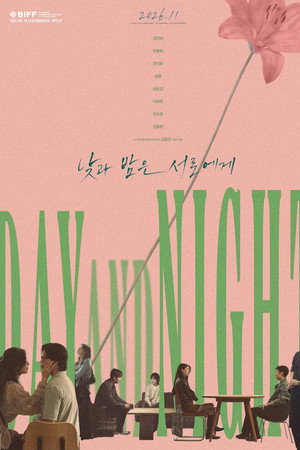
Student activism during the Indonesian dictatorship is at the heart of Yosep Anggi Noen’s historical feature The Sea Speaks His Name; Kim Jung-hoon’s Shaving explores the horror of grooming, whereas Tanaka Miki’s Silver Express claims to address asexuality and aromanticism, and finally, Lee Yun Chan’s To Be Ordinary revolves around social ostracisation and assimilation. It sounds like a theatrically relatively progressive choice, though the overall absence of minority groups, lack of ethnic diversity, and low woman count betray an underlying reactionism. Kim Jong-kwan’s opening title The Table: Day and Night delivers the usual mainstream mêlée of artsy superficiality at an opening ceremony, setting a tellingly hierarchical tone.
Attendance is by invitation only, with the press guide pointing out that accredited journalists are not included. Such strategies look a whole lot like cherry-picking who will report what and, especially, how, from the event. Its selection of supposed highlights from the international festival circuit is so extensive that it doesn’t really seem like one. Not one, but two sections by the names of Icons and Gala Presentations showcase over two dozen films which already had their premiere elsewhere. Their titles span from Hirokazu Kore-eda’s Look Back to Pedro Almodóvar’s Bitter Christmas and Judith Godrèche’s A Girl’s Story. Still, the list of international celebrities remains quite short.
Michelle Yeoh, who will receive the Asian Filmmaker of the Year award, Maggie Gyllenhaal, presenting her short film Flesh Impact, as well as Isabelle Huppert, are the most well-known confirmed attendees. With Korean cinema in a financial crisis, the BIFF, as the Busan International Film Festival is called for short, frames itself as the road to recovery and a renaissance of global prestige. Whether that means reshaping an alternative artistic authority into another podium of competitive cinematic conventionalism remains to be seen. Starting just about a week after Busan, Tokyo is quite literally only waiting to take the spot of platform for dramatic discoveries.
All features from the competition are listed here.

 Bildnachweis: © BIFF 2026