
×
Erwähnungen
"If we lose our connection to history, we cannot build a better future" - Interview with Reis Çelik on "Night of Blindness"

Von Lidanoir in "If we lose our connection to history, we cannot build a better future" - Interview with Reis Çelik on "Night of Blindness"
am Donnerstag, 18 Juni 2026, 19:40 Uhr
- 0
- 0
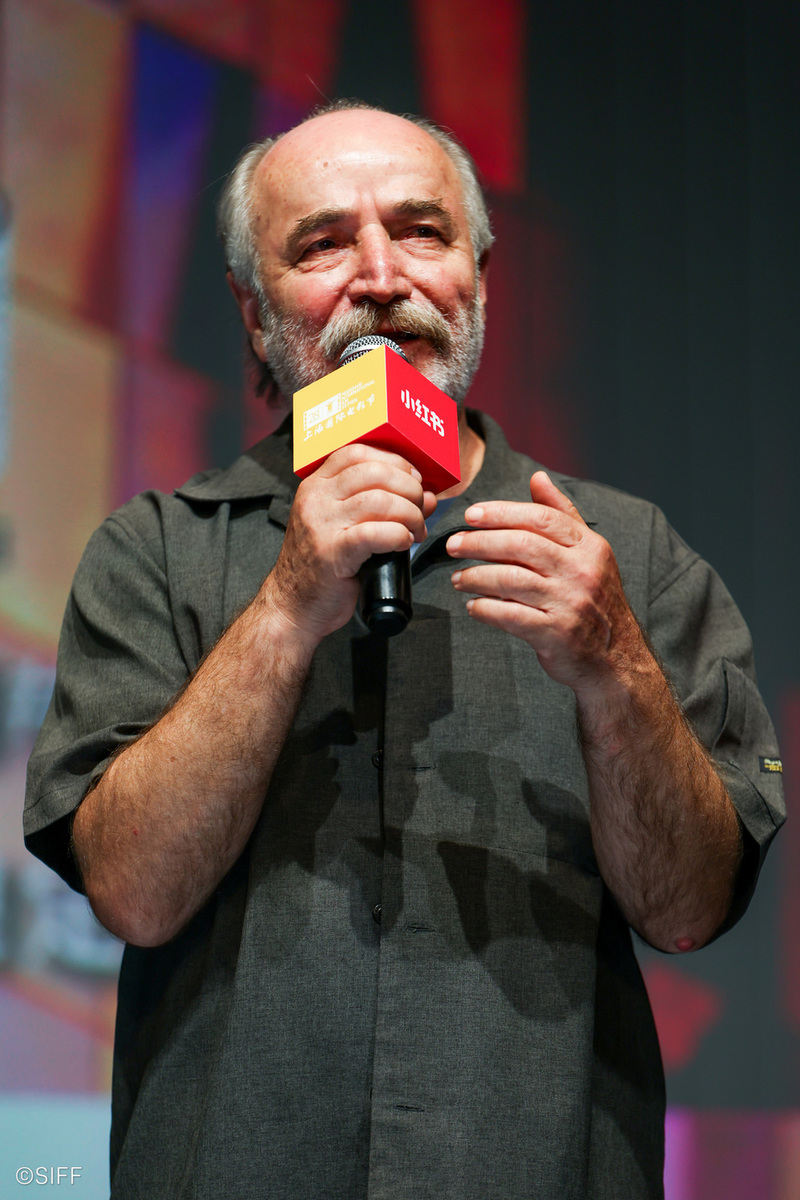 Bildnachweis: © SIFF 2026
More than a decade ago, his intense drama Night of Silence won him a Crystal Bear at the Berlinale. Now Reis Çelik presents the long-awaited second part of his "Night" trilogy, evolving around the lack of social attention to urgent issues and one another. Premiering in competition at the 28th Shanghai International Film Festival, Night of Blindness looks back at the Turkish director's home country during the 1980 military coup when he himself was persecuted. On-site in Shanghai, Reis Çelik spoke with Lidanoir about how his own experience inspired the story, working with a mostly non-professional cast, and how the past repeats itself, not only on screen.
Lida Bach: Thank you for being here. How do you feel about being in Shanghai so far?
Reis Çelik: Throughout my career, my films have been shown at many festivals around the world. My latest film I present at Shanghai, because I see that the festival embraces a new generation of cinema and alternative filmmaking. I have followed it for years and always wanted to attend. Shanghai is a fascinating city with a huge population, a large cinema-going audience, and a very intellectual film culture. People talk about cinema everywhere: in cafés, on the streets, at festival events. I’ve had many conversations about Turkish cinema and world cinema here.
LB: Your film is part of a trilogy. The first part was Night of Silence, the second is Night of Blindness, and you’re planning a final part, Night of Deafness. Could you tell us about this film project and its themes?
RC: I have wanted to make this trilogy for a long time because I believe we are living in a dangerous period. Increasingly, people do not see, do not hear, and do not respond to what is happening around them. The trilogy reflects on the political and human condition of our time. When I look at the world—from Palestine and Israel to the United States, Argentina, Iran, and many other places—I see societies struggling with similar problems. People become blind to injustice, deaf to suffering, and disconnected from reality. We are losing our ability to see clearly, to speak openly, and to listen to one another. Through this trilogy, I want to examine those problems and encourage audiences to reflect on them.
LB: The story is inspired by your own experience. Would you like to tell us about that?
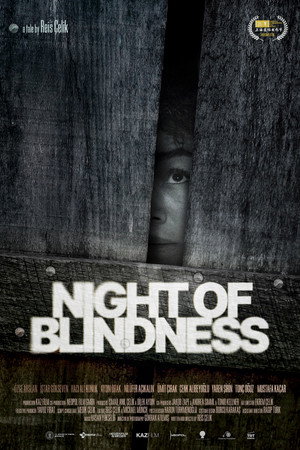
RC: When the military in Turkey overthrew the parliamentary system during the coup in 1980, many young people involved in political movements were arrested. At that time, I was nineteen or twenty years old and persecuted by the military. At one point, my friends with whom I worked on a building site had to hide me in the framework when the military came and searched the place. One day I was stuck in this wooden block while they questioned my friends and pressure them. It was a very difficult and dangerous period. Around 600,000 people were imprisoned, and many killed. Those experiences stayed with me.
Although today the methods have changed, the underlying systems of power have not. Capitalism, imperialism, authoritarianism … In the past, repression was more direct and visible. Today it often appears softer, operating through technology, telephones, and the internet. But the mentality remains similar. If we do not discuss the past, we risk repeating it.
LB: The central theme of the trilogy seems to be political repression. Given your own experiences, are you worried that these times may return?
RC: Yes, I am even more concerned today. The dominant political and economic powers increasingly seek to control people, and technology has become a new tool for that control. In many ways, people are becoming more dependent and more vulnerable to manipulation.
I believe this is a serious issue, and it is something we need to discuss openly. People are increasingly being shaped and constrained by dominant ideologies, and art has a responsibility to reflect on these developments.
LB: Your film takes place in a single location during one night. How long did it take to shoot, and how did you find the location?
RC: Both Night of Silence and Night of Blindness were filmed in approximately twelve or thirteen days. I wanted to push the limits of cinematic storytelling. You do not need to show a great deal to tell an important story. Sometimes a small light in complete darkness is enough for people to see.
For the entire trilogy, I chose to set the stories at night, because in darkness, even a small light shines brightly. I wanted the audience’s attention on a single place and a concentrated atmosphere. I also chose to shoot the films chronologically, since I wanted the actors to experience the story as it unfolds. This allowed the tension and psychological changes to develop naturally. I wanted the actors not simply to perform emotions but to live through the experience. Shooting chronologically helped them connect more deeply with the story.
LB: And what about the location itself?
RC: For Night of Silence, we filmed in the house where I spent my childhood and witnessed many of the events that inspired the story. For Night of Blindness, we worked in central Anatolia, where many construction workers live and work. However, because the story takes place in the 1980s, we had to build much of the environment ourselves. We searched for authentic materials from that period to recreate the atmosphere accurately.
Many of the workers appearing in the film are not professional actors. They are real workers from the region. The cast and crew also lived together in a remote village throughout production. We wanted everyone to remain immersed in the atmosphere of the story.
LB: What does the black-and-white cinematography mean to you?
RC: The story itself felt black and white to me. The period it portrays was emotionally and politically stark. In Night of Silence, color played an important role because it centered around a wedding, where red and white carried symbolic meaning. In Night of Blindness, I felt that colorlessness better reflected the world of the characters and the historical period.
LB: The visual style is almost expressionistic. Is German Expressionist cinema an influence on your work?
RC: I am deeply influenced by German culture and literature, but not specifically by Expressionist visual techniques. I am inspired by thinkers and writers such as Marx, Thomas Mann, and especially Bertolt Brecht. Brecht’s epic approach to storytelling has had a strong influence on me. I am also inspired by Russian literature, Russian cinema, Iranian music, Iranian literature, and many other artistic traditions. Rather than imitating a specific style, I try to synthesize these influences and create my own cinematic language.
LB: You work with both professional actors and non-professional performers. How do you find them?
RC: In all my films, I use very few professional actors. The main roles require trained performers, but I prefer to surround them with real people. If I need construction workers, I try to cast actual construction workers. My work as a photographer for newspapers and magazines taught me how to observe faces and people. When I visit a location, I walk around, observe, and look closely at people’s expressions and physical presence, trying to find people who are naturally close to the characters I have imagined.
LB: Censorship has increased in Turkey and elsewhere. Are you concerned about how the film will be received in your home country?
RC: I am not particularly worried about this film being released in Turkey. What concerns me more is that censorship is increasing globally. Even when societies appear free, there are often hidden forms of censorship. Capitalism itself can function as a powerful form of control. When daily life becomes so difficult that many people struggle simply to survive economically, broader political and social issues often receive less attention. This is not unique to Turkey, but happening all around the world.
LB: Now that you’ve presented your film in Shanghai, what do you hope audiences will take away from it?
RC: I hope they remember. We must not forget our past. If we lose our connection to history, we cannot understand the future or build a better one.
LB: You’re already working on the last part of the trilogy, Night of Deafness. Would you like to tell a little bit about it?
RC: Not yet. I have many stories in mind. Some are connected to current events, others have been developing in my thoughts for many years. At the moment, I have not decided exactly which story it will tell. Night of Deafness could emerge from something I have never considered before. Even a conversation like the one we are having right now.
LB: Thank you for the interview!
Wird geladen...