
×
Erwähnungen
Fatih Akin: "We have to live every day knowing death can happen at any time"

Von Lidanoir in Interview with Fatih Akin on "Geister"
am Samstag, 19 September 2026, 02:12 Uhr
- 1
- 0
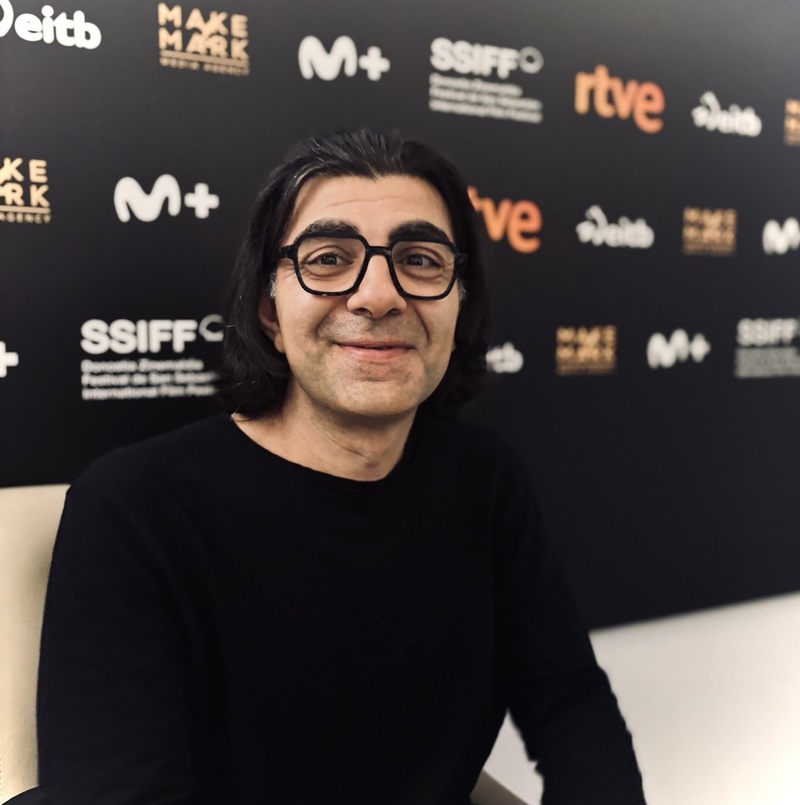 Bildnachweis: © MB
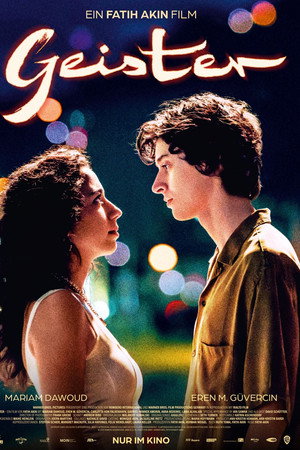
Years ago, Fatih Akin sent a film to San Sebastian, but it wasn't accepted. Now his new feature Geister even owns the prestigious position to open the 74th edition's competition. Blending fantasy and psychological drama, the tender supernatural story sees its young protagonist haunted by a love separated by death. Just a few hours ahead of the grand premiere, the German-Turkish auteur spoke with Lidanoir about cinematic spirituality, film as a way to deal with grief, and finding inspiration through his own children.
Lida Bach: What inspired you to tell this story, which connects today’s youth and young romance with ancient beliefs, religious traditions, and spirituality?
Fatih Akin: This is a very personal piece of work. It contains everything I have seen and discovered, everything that has influenced me in my life, including my religious background. My parents were Muslims, and religion was always present in our household. But that changed with my discovery of cinema. In a way, cinema became my religion, but the spirituality remained. At the same time, I’m a filmmaker and a family person. I have children, and I try to be a parent, which is difficult because when you have this job, it’s not just a job. When you’re obsessed with something, you have very little time, perhaps too little time, to spend with your children.
This film gave me an opportunity to observe my children and spend time with them. I exchanged ideas with them about their influences from pop culture, particularly Japanese anime. They told me which films to watch, and I discovered them through my children.
I collect all these things because everything I do is a kind of collection. I’m in constant dialogue with the world around me. It all found its way into this love story. The screenplay was not originally mine, but when I took it over I intuitively incorporated all these elements. It’s always a matter of balance: finding a way between conventions and innovation.
LB: You have explored many social issues in your films, from migration and racism to questions of belonging. How have these themes changed over the course of your work?
FA: It’s a story of emancipation. When I started making films in the mid-1990s, the perception of immigrants was very different from today. For us, the children of immigrants, to call ourselves Germans was something new. There weren’t many migrant filmmakers or actors at the time. When you said, “Hey, I’m German,” people would respond, “What? How can you say that?” And that reaction came not only from white Germans but also from Turkish people. But now it has become accepted. My films and their themes reflect that.
The fact that Farasha wears a headscarf is no longer an issue. It’s simply part of her character, shaped by trauma and the circumstances under which she came here. My parents came to Germany in the 1960s to work. The actress and the character in this film, by contrast, came here in 2015 because of the war. I also tried to incorporate what the actors themselves brought to the film.
LB: You mentioned during today’s press conference the blend of melodrama and fantasy of contemporary Japanese anime as an influence…
FA: Exactly. I didn’t grow up with anime. Of course, I knew Akira and the other big classics, but I’ve become someone who immediately goes to the cinema when a new anime comes out. That’s something I learned from my children. Seeing how they combine melodrama and fantasy was completely new to me. Western cinema does this to a certain extent. Geister is a film like that, perhaps. It could also be an anime. But Japanese anime has a different perspective and a different sensitivity.
They also work very directly with a young audience, and it’s fascinating to observe that. When I started making films, I worked in a cinema as a young person, selling ice cream and tickets. I had the chance to go into the screenings and watch the films. When you see the same film again and again, you notice where people laugh, where they cry, where they become silent. Japanese anime, in particular, has different codes and different ways of addressing an audience.
Films like Bong Joon Ho’s Okja work in a similar way, but they are relatively rare. Sometimes these approaches also come from the Middle Eastern world.
Another influence was L’Amour Oeuf. I saw the film when I was still working on this one.
LB: You also have this dark theme of death on multiple levels. The father of the girl dies, then she dies herself, and the young man wants to end his own life. Where did that come from?
FA: Somehow suicide is something which always appears in my films. I don’t know why. My very first short film, my graduation film for film school, was already about that theme. Gegen die Wand is also about that. And Aus dem Nichts is like that. I’m a joyful person in real life, but my therapist said, “Your films have so much darkness and so much pain.” The way I handle it, he says, is very honest. I handle it with care and honesty. He said, “It must be something inside you that you’re able to put into the films.” And I said, “Yeah, maybe the films help me not to have it in my life. Maybe I can use them for healing.” It also comes from the world surrounding us. A world with terror, wars, cruelty. It finds its way into my work which is also a reflection.
LB: Farasha refuses to let death have the final word. Is there something optimistic in that, too?
FA: This film is also about dealing with death. How you handle it is always a challenge. I believe in the 40 days rule which is perhaps a way of handling pain. It gives you time and space. It’s not like everything is okay on the 41st day. But you have to go accept that life goes on, and that also means you smile. Pain needs time. The toughest pain leaves scars, but you learn to live with it. That’s our destiny in this world. We have to live every day knowing death can happen at any time, to us or to the people we love. How do we do it without going insane? We forget and carry on.
When she appears and wants to help, this reflects what happens when we learn to live with it. Sometimes you reach the limits of realism. Sometimes it’s difficult to face the problems of this world with realism, and you need help from superstition, from spirituality, from cinema.
LB: A ghost story is also about how we keep experiences and individuals alive in our minds. What are your thoughts on the role of memory in this story?
FA: I have family members, but especially close friends—friends in the film industry—whom I lost along the way. Birol Ünel from Head-On, who died too soon. The producer of that film, Andreas Thiel, who produced it and with whom I founded the company, died.
There was also the great producer Karl Baumgartner, Baumi, who produced Underground and the first Jim Jarmusch films. He passed away. Fabienne Vonier from Pyramid Films passed away. Francis, her husband. Xatar, the young rapper about whom I made Rheingold, just died last year. Before that we had a fight about music rights and things like that. Both our lawyers said, “It’s better if you don’t talk.” And then he died. The issue wasn’t so important. It was something we could have solved. If you knew that he was going to pass away, you would act differently. Suddenly, he was gone. I was happy I had the film, because the film is also a memorial for him.
My very fist work is a documentary about my family, how the immigrated from Turkey to Germany. So many of them, even my father, have passed. But I have them on film. I have them in my memory. For me, filmmaking is a very good tool for keeping people alive.
LB: You have amazing settings, especially the final scenes on the TV tower. How do you choose your locations? What do they signify for you?
FA: In the beginning, when working on the film, I thought, it could take place anywhere. But two years ago, it was the 100th anniversary of Alfred Hitchcock, and they showed a lot of restored films. One of them was Vertigo, which has a similar theme: falling in love with a dead person. The way Hitchcock handled San Francisco. It’s so unique in Vertigo, so romantic. And I thought, this story is about Hamburg. I’ve shot so many films in Hamburg but had to find a way to shoot in places I hadn’t filmed before. That became the task for my location scout and for me: to find specific, romantic places. I needed something really remarkable. The place where they meet is also the spot where he decides to jump. Then I saw the tower. Nobody had shot there before.
LB: Music has always been very important in your films, also as a way of crossing cultural boundaries. You’ve described music as cinema without borders.
FA: We had this concept of anime, which I would consider a modern form. But I needed something romantic and classic for this film. Soundtracks today are often very electronic and atmospheric. I thought it would be interesting to have this classical, Morricone-esque style and mix it with modern storytelling.
LB: You often portray complex, strong female characters who find a way to get through difficult situations. What draws you to these characters?
FA: I just observe them. Throughout history, women had more struggles than men. When you have challenges, it’s always a drama, and it’s cinematographic. That’s why women, for me, can be more cinematographic through their struggles in everyday life. Physically, men are stronger, and historically they have often been more powerful, so there are fewer boundaries for them to deal with.
Lida Bach: What’s the place for childlike innocence in a love story like this?
FA: This all started as a children’s film. Ten years ago, my son had the idea to make a film about the friendship between a ghost and a living kid. As my children grew, the characters grew, too. But this - let’s call it: pureness - from the children’s story stayed in the film. I like to work with kids. I’m old, and consider even the 20-year-olds as kids. They’re less fucked up than adults. There’s a song by Jane’s Addiction with a line about how children are innocent, teenagers are fucked up in the head, adults are even more fucked up, and elderly people become like children again. That line stayed with me.
From time to time, it helps to work with less fucked-up people. I believe that pure inspiration isn’t coming from you. You have to create a space to let it happen. Because kids have more fantasy, this happens more often. The kids of today are our retirement money, but when I see them, I also see a better world. I see hope. They will survive Trump. They’ll find a way to deal with artificial intelligence. We learn a lot about ourselves, especially when you do art. In a way, what we do is play. Play with the camera, with the actors, with the screenplay.
Lida Bach: You’re at a lot of festivals with your films. Do you have a favorite festival, or one that you would especially still like to go to?
Fatih Akin: I’d like to go to Busan or Rio. I’m invited there. For the first time, I’m here at this festival, where I always wanted to come here. San Sebastián represented this sophisticated place for me. I sent a film here in the past, but they rejected it. But now I do. Even the opening film!
Lida Bach: What a triumph
Fatih Akin: Yeah, what a triumph. People like Nolan or Iñárritu don’t need festivals anymore. A festival could even damage the run of their film. But we filmmakers need festivals. A festival always brings attention. It’s a place where audiences notice a film. And festivals also create a dialogue with filmmakers, with the press. My favorite festival doesn’t exist, because certain films have the right festival. Head-On was the perfect film for the Berlinale that year. Der goldene Handschuh, a few years later, maybe not. The better the festival programmers are, the more they think not only about their own festival but also about what is good for the films. For us filmmakers, that can sometimes be difficult. When I was rejected here in San Sebastián, I was frustrated. But maybe it wasn’t the right year or the right film. Good festivals find a way to protect the films.
Wird geladen...